|
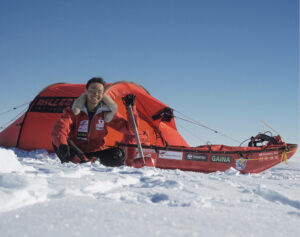
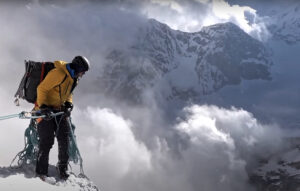
David Rosa, leader of the UPV Valencia team, testing the Summit Oxygen system in BC. Everything worked fine there - the failures started in the death zone above 8000 meters, on the team's summit bid. Image courtesy of the team (click to enlarge).
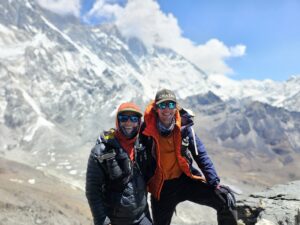
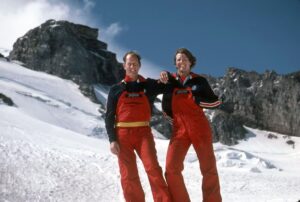
"We tried to buy Poisk when we noticed the problems, but couldn't afford it," reported Valencia team member Jorge Verdeguer (in the image). Image courtesy of the team (click to enlarge).
Nawang, Valencia expedition's altitude sherpa, also tested the Summit Oxygen system - but chose to stick to Poisk, given to him by a previous client. Image courtesy of the team (click to enlarge).
"At 3am on Saturday 21st May my attempt to climb Mt Everest came to a final close," reported Briton Keith Woodwall. "At just short of 8500m above the South Col and near the Balcony we had no option but to turn around. Since 9pm when we set off I had been fighting for breath. My Summit Oxygen equipment was playing up and my cough and overall condition was not good." Image over Contact 3.0 of Keith back in BC, courtesy of K.Woodwall.
LINKS
|
ExWeb Special: Oxygen on Everest - The highest death lab in the world, part 2
Posted: Dec 14, 2005 12:05 am EST
"Summit Oxygen in my mind would be guilty of criminal negligence if they promoted the system for use above 8,000 meters, as it simply does not work at altitude," reads an email from an Irish climber to ExWeb. The reason: 80% rate of failure reported, and at least one death suspected - possibly caused by Summit Oxygen.
In a September email, the SO founder responded to a complaint by a Spanish climber asking for a refund of deposit: “Graham has left without a trace and has made himself unavailable, this has left me in a very difficult position, one that I am desperately trying to resolve. It appears the security deposits given over in good faith have been used as working capital for the company, and the company is not in a financial position to repay them at the present time.”
The climber was lucky to get a response at all, according to the Irish mountaineer:
"I am just wondering if there are any other reports about the Summit O people not returning deposits. Aside from the failure of their system at altitude (duh) and having to buy Poisk on the hill (Everest) it would now appear that they are being very slow (unwilling?) to return deposits, answer their phone, reply to emails etc. Have they gone bust??"
Not according to a new posting on Summit’s website - Clients List for 2006: Army Mountaineering Association Everest West Ridge Expedition.
2003: 1 summit. 2004: 0 summit.
Imagine you come up with a new nitrogen mix and scuba gear setup. You then sell it to newbie divers, although you know that it probably won't work where they are going...
Welcome to Summit Oxygen Ltd.
It's not about scuba diving, but life saving oxygen on Everest. When introducing the system in early 2004, ExplorersWeb cautioned climbers about its limited track record on altitude. But the oxygen was already highly advertised and clients lined up. The system was reported to have sold out.
The next year, in early 2005, another headline at ExplorersWeb: “A buy for Poisk, a hold for Summit Oxygen." The reason: In spite of a highly successful 2004 season on Everest, with a summit success ratio hovering around 70-80%, not a single one of these summits is reported to have been achieved using the new Summit Oxygen system. Instead, there were rumors that the pipes had frozen.
2005: Sold out again
But Summit Oxygen continued to sell well in 2005, boasting an interesting list of customers - including Alan Hinkes and the Diabetic climber Will Cross.
The following 2005 client list was posted on SO's website:
Everest North
Adrian Crane
Augusti Terrents
Aud Jovall
Jorge Verdeguer
Indian Army Womens Everest Expedition
Indian Airforce IAF
Project Himalaya
Everest South
Dan Mazur
Keith Woodhouse
Chhiring Dorje – Everest Record Attempt
Will Cross
Kangchenjunga
Alan Hinkes
And here's how it panned out:
Base camp we have a problem
Contrary to 2004, in the Spring of 2005, expeditions on summit attempts were repeatedly pushed back due to bad weather. The misfortune turned out to be the climbers’ biggest stroke of luck. For it was on the initial summit pushes high up, that alarming reports began to arrive. A three-member Spanish team from Valencia Polytechnic University was turned back above camp 4 on Everest South. Their webmaster reported : "All the British Oxygen bottles (Summit Oxygen) they had have failed except for four. These are the ones Jorge and Haya are taking along to the summit.”
Two hours later, a new report was posted on their website: "The four remaining O2 bottles have failed as well."
Keith Woodall reported from his summit push on Everest South Side: “Since 9pm when we set off I had been fighting for breath! My Summit Oxygen equipment was playing up... night was perfect and moon lit...but I was still having breathing problems with the Summit mask and regulator. I had to swap the mask for the Canular, partly because of my coughing and partly because it wasn't responding for my demand for Oxygen. The unit pulsed small doses automatically - and on the top setting at least I got some Oxygen into me!"
Now a report came also from the North side: "The Indian Air Force team had 2 members turn back at the second step on the North side that same day – one with a broken crampon... And the other with a failed Summit Oxygen system, problem with the o-ring??"
And shortly after yet another mail from Everest North Side: "Tshering Bhote has two Norwegian clients who have 16 (?!) bottles of Summit, he has just returned from a failed summit bid. They turned back because of high winds and also oxygen failure. One bottle they were using had leaks in two different places, between the cylinder and the first stage, and then also between the first stage and the pulse dose meter. They had problems with other bottles, including another leak between the cylinder and the first stage. The Indians have one reg that was out by one setting. By a rough calculation more than half of the uses of the system have failed."
Summit Oxygen take 1: "There are certain failures with our system"
ExWeb promptly contacted Summit Oxygen about the situation. Graham Rees (the very same who later “left without a trace and made himself unavailable,” according to SO's founder Neil Greenwood) immediately confirmed the problems: “For the last week or so we have sadly received emails and telephone calls from various expeditions stating that there are certain failures with our system:
1. Pneumatic conservers self ‘pulsing’ over 8300m;
2. Regulator ‘O’ Ring freezing at 7300m;
3. Leaks from two points – Cylinder/integral regulator seal & integral regulator above gauge at different altitudes above 7200m.
Based on the reports, Summit Oxygen estimated that 50% of the bottles and 25% of the conservers (delivering the oxygen) were experiencing problems.
The systems worked well in BC - the problems first occurred at high altitude, thus preventing “sorting out” bad batches prior to going up to higher elevations. The climbers were only lucky that Everest weather had sent them back down.
Summit Oxygen take 2: "Rumors spread by MountEverest.net"
"Climbers might appreciate Summit Oxygen’s swift and honest response to the problem," ExWeb wrote. But that changed a couple of days later, when an email from SO founder Neil Greenwood arrived: The problems were mainly rumors spread by MountEverest.net, he wrote.
By now, on both sides of Everest climbers scrambled to buy POISK, whilst more alarming reports surfaced. The Indian Air Force lost a climber. Duncan Chessell had to turn back due to oxygen failure. The IAF carried both systems, but Poisk mainly for the Sherpas. The Indian Army women had oxygen failures as well, according to a debrief in Tribute India.
Climbers' take: 80% failure rate on Summit Oxygen
"It seems as though there is about an 80% failure rate on Summit Oxygen, there is widespread talk of all the people getting together to sue," reported climbers. "People have come up with all sorts of fixes, dripping water over the leaks, o-rings and various other attempts; it then freezes and holds the leaks once the pressure has bled off to 50%...oh what a joy! More problems the colder the units seem to be..."
"There is now a mad scramble for those remaining to buy out any and all Poisk systems on the hill, try to get it up in time and get the Summit stuff down. What a pain for them all. We have now replaced all the Summit Oxygen with Poisk, at a considerable additional expense..."
End of season body count
By the time the mountain was ready for summits, most climbers had managed to replace Summit Oxygen with Poisk. It took until May 21st for Everest to be summited at last; the latest first spring summit in 45 years. The summits came from the North side - not until Monday morning May 30th Nepal time, did the Everest South side climbers reach the top.
The total Everest fatality count stopped at 6 climbers, 4 of them climbing with unguided or low budget expeditions. 3 climbers died on the South side, (Summit Climb, Henry Todd, and one on a Mountain Madness permit) and three on the North (with IAF, 7-summit club, and Kobler.)
All lost climbers were male, many Everest first timers. All but two (one who fell in the icefall and another who suffered a heart attack below BC) seemed to have died of general altitude exhaustion. Two died lying down in the snow on descent, another died suddenly above 8000+, the fourth was found dead in his tent in high camp. It's not clear what system they used, but all four climbers had been on supplementary oxygen.
Summit Oxygen - no reply
In the aftermath, it seems that Summit Oxygen has no intention whatsoever to take responsibility for the financial loss and the potential disaster they could have caused by marketing oxygen without a proven record at altitude. Climbers say that not only does the company refuse to return deposits - they don't even return e-mails. (ExplorersWeb has been unsuccessful in reaching the company as well.) Irish climber Humphrey Murphy, wrote to ExWeb:
"Damn, I should have kept their equipment; a Summit O bottle cut length wise would make two very good garlic bread holders! Well they have to be good for something. Perhaps people might have suggestions as to what uses a Summit O system might be put to, they certainly are no good for high altitude mountaineering."
The testimonies
Team Esplugues al Everest from Cataluña (Spain), attempted Everest via the North Col route. They told ExplorersWeb:
"During tests in BC everything worked well. It was when we used it at high altitude that the problems started. I used the system one hour, on my way to C2 in my second summit bid. Up to C2 the system worked OK, but while I was resting in C2 and afterwards, on the way up to 8000m (I turned round there due to bad weather) the regulator malfunctioned: It worked only sometimes – providing O2 and then suddenly stopping without warning. I had to stop three times to try and fix the problem, which was kind of a mess at such altitude. I was using the canula system."
"My climbing Mate Xavi Arias started using the system from C3, on his final summit push. He had exactly the same problems I had. In the end, he switched it off and tried to go for the top without O2; he had to turn around at 8500m, exhausted and very cold."
"We are considering taking Summit Oxygen to court. They never returned the deposit money we had to put in a bank account when we bought the system (more than 2,400 Pounds Sterling ). They said they were ‘short of cash’ in June. Since then, they have not answered our emails."
What's up for 2006?
Earlier this week, Jorge Verdeguer from the Valencia team told ExplorersWeb that everybody attempting Everest from the South side this Spring using Summit Oxygen, had failures from C4. The Valencia guys took seven bottles up to C4 on their summit bid. Two of the bottles failed when connecting to the regulator: The valve failed, and the gas escaped. The other bottles were OK at first, but then the regulator failed flowing O2 randomly, instead of on demand.
In three emails between Jorge and Summit Oxygen, it seems that one owner/employee has disappeared, while the founder is trying to run the business as usual. The 2005 Everest season was possibly saved from disaster only by the information spreading fast on the internet, and the season's uncommonly bad weather. The question is where 2006 is headed. An email from Neil to Jorge gives a clue:
"We have a number of potential orders developing at present for climbers using our electronic system. My hope is that this will generate enough revenue to repay your security deposit."
And in the final mail: "As for compensation and the performance of the equipment, having spoken at length to the company that manufactured the units, they are not prepared to accept any liability. They have taken the stand that because we cannot verify exactly which items failed or the nature of the problems, that it is very hard to ascertain what has happened. On arrival back here the equipment was inspected and tested and all worked fine. To that end we are not in a position to offer compensation to clients who feel damaged by a situation that cannot be verified. I am, however, prepared to offer you a substantial discount if in the future you decide to use our equipment again."
So there you have it - a solution to the possible problem of selling useless scuba gear to newbie divers: Should they manage to shoot back up and yell at you - just offer them a discount on the next purchase!
According to climber Murphy's debrief on the system: "I met the Indian Air Force first team on their descent to BC after the May 21st attempt. They seemed to attribute the failure of the Summit O system to not only their aborted summit but also to the potential loss of digits."
That's one who won't get to enjoy the rebate.
Next: The history of close circuit oxygen and new players sprouting up
Irish climber Humphrey Murphy, wraps up what actually went wrong with the Summit Oxygen system:
"I was on the North side with Monterosa. I ended up summiting on my own (May 30th) as the rest of my team (two others) got sick. I had a doddle of a summit day once the O got sorted and even went for a short jog on the ridge. The weather was fantastic until that afternoon and then it seriously deteriorated. We bought a total of 9 bottles and three systems.
Originally I was going to summit without O and brought it for emergencies, however, as the weather was so poor and summit windows so elusive I went with the system in the end. I actually think that the Summit system is great when it works. However, here are the problems:
The regulator is not sensitive enough to work during sleep, it is not sensitive enough to detect the shallower breathing and on the rare occasion that it does switch on, you get the stored amount i.e. a full minute’s blast rather than the smaller regular interval pulses. This big blast of O invariably wakes you up. So you yo yo from no intake to a large intake and waking up.
The o rings are dodgy, the o ring on the output gizmo and others are not reliable. It only happened to me with one bottle that was at 7,600 for a few weeks but when I connected it to the regulator it started to dump O out from the lower valve. One of the other solo Monterosa climbers had the O ring at the connection to the regulator flatten on him and so could not seal and hence steadily dumped.
The design of the regulator is poor with respect to the conditions on the hill:
The outlet stem is too proud and if the bottle is placed carelessly or moved around in a ruck sack or with minor jolts or bangs against other objects (as tends to happen at altitude) the stem acts as a lever and rotates the regulator. This even minor rotation of the regulator while under pressure results in a sudden dumping of O from the connection point at the O ring.
This sudden dump happened to me seconds after I switched off my cooker in the tent, the flow of dumping O would have gone straight for the flame if the cooker was still on. (Everyone cooks in their tent at altitude and any system should allow for this insofar as it should not be so simple that a bottle knocking gently off a boot will suddenly start to purge). On my descent a summit bottle regularly started to dump as it was strapped to the outside of my rucksack and would rotate against the fabric and hence the regulator would unscrew slightly. There has to be a far greater margin for error.
The threads for the regulator are too large, compare them with Poisk. This results in stripping of the initial threads on a lot of the bottles. Additionally, at altitude with cold hands it can take far longer to change bottles then with Poisk due to the difficulty or movement margin of these larger threads. It has taken me minutes to sort out a summit reg. The wide thread does not allow the bottle to be screwed shut tightly and also creates an easier egress for the O.
Each regulator has a different sensitivity, at one stage we tried out four regulators; three of them had different characteristics; some were more sensitive than others at detecting breathing, and some seemed to give greater amounts of O for the same setting.
At altitude the regulators shut down, I started to experience difficulty at 8,200 when suddenly I was receiving the equivalent of one liter per minute despite a setting of 5 on the reg. For this one liter I had to suck hard to alert the reg to my demand. I swapped regs (I carried two of everything because the system was so maligned at this stage) The second reg experienced the same problem. In the tent at 8,300, I warmed up the bottles (over a flaming cooker not the safest procedure) and the bottles O flowed at the proper rates. On leaving the tent for the summit the next morning the reg malfunctioned again (cold?) and only for a loan of a Poisk and the purchase of some spare O, my summit bid was gone. Matt (Monterosa) experienced similar probs at 8,500 when it was too late to do anything and lost his summit bid.
In fact Jamie Mc Guinness’s group checked their regs and bottle combinations and they surmised that the problem was in the bottle since the same bottle gave consistent problems while the regs worked fine on other bottles. It is too easy to alter the setting on the Reg compared to Poisk.
The settings on the reg are not accurate as I usually had it at 3 as a minimum and 5 at max compared to 1 and 3 on Poisk. Julian in Jamie’s group used a pulse ox meter and experimented with the flows and conjured re the inaccuracy of the regulator outputs.
The aluminum alloy used at the outlets is too fragile, an errant stone or bang and the metal chips and this resulted in the seal in one bottle being damaged as the metal at the base was grooved by a simple bang of a rock and this grove prevented a full seal by the reg."
Criminal negligence to promote the system above 8,000 meters
"In short the engineering is not robust enough, the design does not allow for the reality of high altitude climbing, and there are some serious problems with the consistency and internal workings of the regulator, which is at the heart of the system. I used Summit before eating (set at 5 for 20 mins before eating) on the summit camps and it was great for my appetite, the single bottle lasted forever and was definitely more effective and used more liberally then if I had Poisk. "
"In effect the concept is great, when it works. If they can iron out the design issues and sort out the regulator they are on to a winner. If not, then the system should not be relied on above 7,800. I suspect that the system will be used by commercial teams below 8,000 meters as it is cost and weight effective; however, Summit in my mind would be guilty of criminal negligence if they promoted the system for use above 8,000 meters as it simply does not work at altitude."
"I met the Indian air force first team on their descent to BC after the May 21st attempt. They seemed to attribute the failure of the Summit O system to not only their aborted summit but also to the potential loss of digits. Feel free to quote on the record re this and tell them that I want my money back and a reimbursement due to having to buy Poisk on the hill!"
SO clients List in 2004:
The Sandy Irvine Expedition – The Final Chapter (Everestnews)
Ian & Andy Prentice
Adventure Peaks
Will Cross
Paul Firth
Mathias Baumann
Offical Greek Olympic Everest Expedition
Dutch Chomolungma Expedition - Autumn 2004
Adventure Peaks - K2
Mike Dodds - Cotopaxi & Chimborazo (Ecuador), 2004.
British Services Makalu Expedition 2004.
Alan Hinkes - Dhaluagiri, 2004.
|