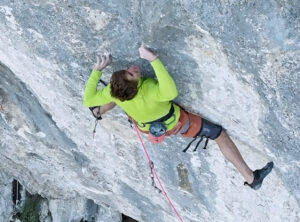
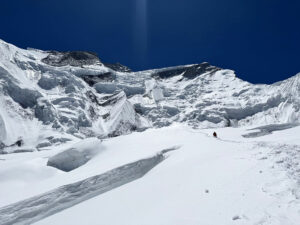
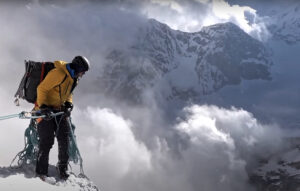
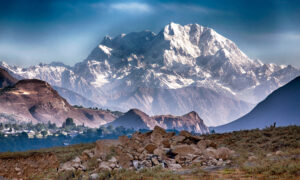
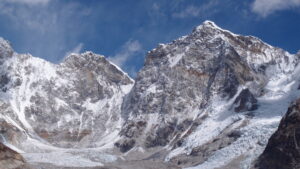
The deathzone. Image over Contact 3.0 of Monica Kalozdi on a difficult section right below the summit of Everest last spring, courtesy of Jean Pavilliard (click to enlarge).
Buy a good mask: Choose a new one or one in good condition. Image of 7Summits Club team member Lorenzo sipping O2 in tent at 8300m on Everest north side this sring, courtesy of Harry Kikstra / 7Summits (Click to enlarge).
Choose the right brand, buy enough bottles, and check each of them in BC. Live image over Contact 3.0 of Sherpas sorting Poisk O2 bottles in Everest's south side BC last spring, courtesy of Adventure Consultants.
The right choice in your O2 system might mean not only a successful summit, but also coming home. Live image over Contact 3.0 of Irish cliber Humprey five meters from Everest summit, courtesy of Duncan Chessell/DCXP (click to enlarge).
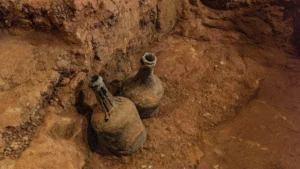
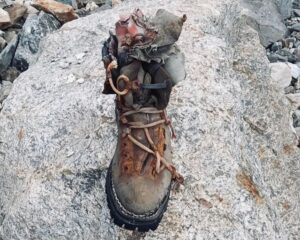
Knockoff Poisk bottle at the South Summit - a common place to change to a new oxygen bottle before and after the summit. Should this bottle fail, the climber will be in real trouble. Image ExplorersWeb files.
ExWeb Special: Oxygen on Everest - The highest death lab in the world, final

Posted: Dec 20, 2005 09:12 am EST
Time has come for the final word in the series. We chose the title "highest death lab in the world" because Everest is a place where individuals will hand you secondary and/or untested life support gear without skipping a heartbeat.

The situation is somewhat unique. It couldn't happen on Mount McKinley or in the European Alps. It's a different story in occupied Tibet and a Nepal fighting ruthless guerilla. These places have lost or are losing thousands to millions of their people and have their own problems to worry about.

This setting becomes the perfect playground for corrupt westerners. Whether they deal in drugs or oxygen, they are always the same - intemperate and shrewd. This Everest mob will sweet talk your pants off, but become threatening if you ask too many questions. They won't give a rat if you happen to die by their goods. What differs them from just another band of criminals is that they are organized, and well connected. You'll find their business all the way to the top of the Everest commercial expedition establishment.
In this situation buddy, you'll have to learn how to fold your own chute.

"We were always in the death zone - our systems had to work all of the time"

An US inspector involved for years in Environmental Crimes gives an example: "We were always in the death zone. Rather than lack of ambient oxygen and atmospheric pressure, we were always surrounded by a toxic atmosphere, including cyanide gas. Granted our systems were much bulkier and help was but seconds away, our breathing systems had to work all of the time - your air goes down in a confined space filled with chlorine or cyanide gas you're dead."

"The system we had was an on demand, however, there was a handy override valve to give a constant flow if necessary. Again, although we had the luxury of bulky cylinders, all of our tanks were limited to the number of fills before pressure testing and recertification of the cylinders were done after set numbers of re-fills. And yes, we used fine beveled threads that sealed nice and tight. No leaks ever."

"We were all trained to service every bit of the systems. Kind of like a parachuter packing his/her own chute. In light of these possibly unscrupulous suppliers I would hope that climbers and commercial operations would start to do some homework. Ask about the engineering before going into a hazardous environment."

The Everest Oxygen Strategy

So how does this translate to Everest? Today, there's only one manufacturer who will "pressure test and recertificate the cylinders after a set numbers of re-fills." That's POISK. Just to give you an idea about your actual choices.

So here goes your oxygen strategy:

1. Choose the right brand = POISK
- Order direct, or verify the brand in writing with your guiding operator or trekking outfitter.
2. Buy a good mask
- Choose a new one or one in a good condition. Consider to buy your own from POISK. Look out for Ted's system in 2007.

3. Check the age of the oxygen (max 2 years) - The bottle carries an ID that can be double checked with PIOSK.

4. Calculate your exact usage for one or two summit attempts (including your Sherpa's)
- Check the survival kit section on this website
Oz tech and using it

5. Train to use and service the system
- Consider to buy an extra bottle between your climbing friends for training, study POISK's website, and the guide on this site.

6. Check the Oxygen
- Weigh all the bottles in Base Camp. Try all the bottles - especially in the last high camp before the final summit push.

Finally: Make sure it's POISK - do NOT use anything else, unless you are in a situation where you have no other choice.

Major pitfalls of Everest supplementary oxygen

Here are the key dangers to look out for:

1. Fake POISK
2. New systems without a high altitude track record
3. Out of date POISK
4. Cutting corners on gas
5. Not training with the gear

A word from a victim

Lastly, a word from a victim - a daughter who lost her dad on Everest last year. The climber was a highly accomplished doctor who had saved lives virtually every single day of his adult life.

On Everest, he climbed to the summit, but suddenly experienced difficulties to move on descent. His expedition leader and Sherpas left him at the Balcony, while he grabbed at their legs pleading with them to not leave him. The expedition was low budget, and so was the oxygen. Another unsolved "sudden death" on the mountain.

ExplorersWeb asked the daughter how she feels after finished reading this series. She said:

"Maybe the oxygen was faulty, maybe it wasn't. But just the possibility - however remote - scares the hell out of me. More than anything, it makes me angry. The thought that anyone would knowingly let a climber use less than perfect oxygen in an imperfect environment - it's depraved - whether you are the supplier, the distributor or even a bystander. All are guilty."

"It's as if my dad were performing surgery on someone and wasn't sure where the anaestheologist got his gas. Just the suspicion of it...In the end you are just as helpless as someone on that operating table."


EVEREST K2 LATEST NEWS
EVEREST K2 FEATURE ARTICLES
INTERVIEWS
EDITOR'S CHOICE
CLASSIC