|
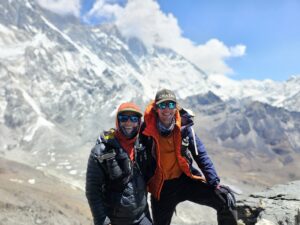
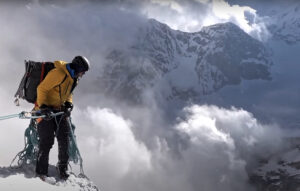
Two years ago, Andrew Brash (in image) gave up his own summit on Everest to save a climber who miraculously "woke from the dead" after being pronounced deceased and left on the peak at 8000+ for an entire night.
Andrew on Everest. Beautiful weather, summit almost there, and then: "Looking at Lincoln we knew there wasn't much to really debate. We certainly knew we had to stay with him to see what could be done." Image courtesy of Andrew Brash (click to enlarge).
Lincoln Hall in ABC, 6400 meter after his rescue. Image Jamie McGuinness, Project-Himalaya.com. (Click to enlarge).
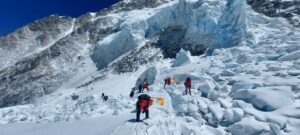
Image of the camp at North Col where Lincoln got first aid by the team doctor, courtesy of the 7summits expedition/Alex Abramov (click to enlarge).
Lincoln was very, very lucky. Others were less fortunate. Locations of 2006 accidents involving David Sharp, Thomas Weber and Lincoln Hall. Graph by ExplorersWeb. (Click to enlarge)
"Please learn about the world of climbing and of mountains before you tackle something like Everest." Image courtesy of Andrew Brash (click to enlarge).
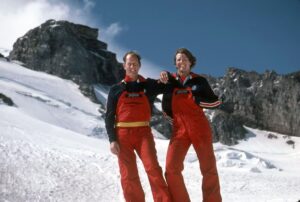
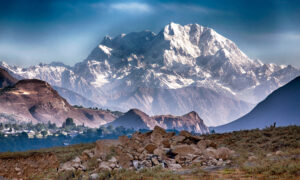
Chogolisa camp. "The most memorable were the early ones when climbing was new for me and seemed so intense. The days ice climbing with Richard Ouairy were some of the best. Being a party of two (and having the mountain to ourselves) on Robson and Foraker. My first Himalayan trip and summit on Cholatse. Of course Everest is something I'll never forget." Image courtesy of Andrew Brash (click to enlarge).
LINKS
|
ExWeb interview: Andrew Brash, "I don't think a David Sharp situation will happen again"
Posted: Mar 21, 2008 12:44 am EST
(MountEverest.net) "Everybody said adventure is dead on Mount Everest, but I certainly haven't found that," Andrew Brash told the Calgary Sun today.
Two years ago, Andrew gave up his summit to save Lincoln Hall, the climber who miraculously "woke from the dead" after being pronounced deceased and left on the peak at 8000+ for an entire night.
Scraping together new funds, Andrew was ready to return for the top this year - on Everest north side.
Of Human Bondage
Like most right now, Andrew and his team are trying to find a way to climb the mountain in spite of all the hurdles thrown at them.
In fact, his interview was ready to be published already two weeks back, and others are in stock; all rendered outdated by the current situation. The Himalaya list of expeditions is such a mess that we have just given up on it for now.
Yet Andrew's story shows the human aspect behind the recent Everest bans.
The 39-years-old Canadian teacher, drummer and "guitar tinkerer" is married to Jennifer, and has two daughters; Anna & Jaime. Hi favo book is the Somerset Maugham classic "Of Human Bondage," and favorite film "The Adventures of Baron Munchausen." Latest, Andrew read Jean Chretien's memoirs, and watched Clint Eastwood's Unforgiven.
Here goes ExWeb's interview with the 2006 Everest hero:
ExWeb: You guys made an incredible thing on Everest in 2006: You gave up your summit for Lincoln Hall. Have you ever regretted the decision since?
Andrew: I've never regretted it. At the time I felt sorry for myself and couldn't believe that I hadn't summited after putting so much effort into the expedition. But I never said to myself "I wish we hadn't of helped Lincoln". He's such a great guy and I'm very glad he's still around!
ExWeb: Mark Inglis told news sources about David Sharp that he and the guys debated quite a lot what to do; while you state in a video on your site that you stopped by Lincoln without even thinking. Why the difference in approach, you think?
Andrew: I'm not sure. It takes some effort to even talk up there, and I think looking at Lincoln we knew there wasn't much to really debate. We certainly knew we had to stay with him to see what could be done. In David Sharp's case it sounds as though he was in worse condition than Lincoln.
ExWeb: In how bad condition was Lincoln at the time? How many hours had he been alone in the death zone when you encountered him?
Andrew: Lincoln was in extremely bad condition. Clearly, he had frozen his fingers and was unable to stand up. He was also stripped down (gloves, hat, upper part of his suit), slurring his words and hallucinating. He had been alone for almost 12 hours at 8600m without oxygen and was sitting inches away from the top of the Kangshung Face when we encountered him.
ExWeb: What went through your mind?
Andrew: I really thought we would see him die sometime that morning.
ExWeb: Lots of money and hardship are involved in an Everest expedition. Do you think you would have reacted differently if you were with a different expedition, one where the leader told you that you can't do anything anyway?
Andrew: Well, I won't ever be seen on an expedition with a leader I don't know. I've never been a client, but rather always a climber, so I can't say the other possibility is one I would ever encounter. Having said that, I would like to think I would have reacted the same way, but it's something that I really can't know.
ExWeb: You have been climbing for over 20 years in Tibet, western China, Pakistan, Kazahkstan, Alaska, Chile and Nepal. Do you think that your experience influenced your judgment?
Andrew: I think so, although experience can make you cold and intolerant as well. On my way down I rationalized that, hey, it's just another mountain 'quot; it doesn't really matter whether I summited or not 'quot; there will be more expeditions and more summits (hopefully), but things happen in the mountains 'quot; constantly!
The most important thing for all of us in the mountains is that we live another day so that we can keep on loving the life we have.
ExWeb: The climbers who passed David Sharp said that he was in a cheap outfit, inexperienced, and beyond help. What's your take on that? Did you discuss the incident at the time in your team?
Andrew: We were aware of David's death, but not of the details. We only became aware of the story when we came down from our time up there. We began to realize a story was developing out there in the media but couldn't figure out why anyone was getting excited about it.
When we heard the accusations against the 40 climbers the penny dropped and we understood. I suppose they criticized his gear in order to help explain what horrible condition he was in, and to make it clear that it was his decisions that had led to the state he was in.
I don't recall whether they described him as inexperienced. I don't have any difficulty in imagining what a horrendous state he was in though. I'm sure it was a nightmare for Inglis. They were faced with making a judgment on life and death, the heaviest thing you could possibly come up against.
The incident certainly calls two things into question for me. One is that people need to think long and hard about their 'summit or plummet' approach and the immense trouble it will cause other climbers should they climb themselves almost to oblivion. As David Sharp said himself, "you are never alone on that mountain", meaning that help will be available, but it also means your actions may well affect others.
We shouldn't just be climbing beyond our capabilities assuming the crowds will get us out of trouble. Of course those mountains are high risk and things will happen, but…
The second is that should someone be in trouble, all the stops should be pulled out to get that person out of there. I don't think a David Sharp situation will happen again. I'm sure armies of Sherpas will be employed should a similar situation arise. But I wasn't there. I can only assume those who were there judged him to be beyond saving. Reading the reports that he was speaking are disturbing though. It is certainly an extremely tragic story.
ExWeb: Have you heard from Lincoln since the rescue?
Andrew: Lincoln and I communicate frequently. He is a hell of a good guy, a special person. He has visited me here in Canada and stayed at my house for a few nights. My wife commented on what a huge loss he would have been to his family.
He is truly hoping I am able to summit this time and get this over with for both of us!
ExWeb: You are a teacher in Calgary, what subject do you teach? Have your students been asking you about the Lincoln incident? What do they ask and what do you tell them?
Andrew: I teach Social Studies and English. In 2006 my classes were extremely excited for me and very entangled in the story. Since then interest has steadily decreased (kids have much more important concerns!) but many do remember and ask questions fairly regularly. Lincoln came to my school last November and gave his talk, so that rekindled the story within the school. The kids loved his Aussie accent and loved his presentation.
ExWeb: Which have been you most memorable climbs/adventures in those 20 years?
Andrew: The most memorable were the early ones when climbing was new for me and seemed so intense. The days ice climbing with Richard Ouairy were some of the best. Being a party of two (and having the mountain to ourselves) on Robson and Foraker. My first Himalayan trip and summit on Cholatse. Of course Everest is something I'll never forget.
ExWeb: How come you often climb with Dan?
Andrew: Dan is someone that John Climaco and I invited to the Shaksgam Valley in 1999. Since then we've been good friends and I like hanging out with him.
ExWeb: He's got lots of heat for being very low budget, what's your take on that?
Andrew: My take is that he simply doesn't go for the flash. We don't have high speed internet connections in BC or brand new tents. But we eat the same food as everyone else does. He's not paying western 'guides' either.
Basically Dan is just a climber who wanted to keep doing trips as often and as long as he could and I think it just morphed into a career of sorts. Dan still uses the same suit and gear he has for years. He doesn't throw money around. What Dan does have is one of the strongest resumes on the hill. How many people can claim they've climbed the West Ridge of K2 and the SE Ridge of Makalu? Dan is the real thing.
ExWeb:What would be your dream climb after Everest?
Andrew: I would think my climbing will slow down for a while. With 2 young kids I will be going to shorter trips. But my dream climb was always K2 and a big wall ice climb 'quot; but that was just a dream because to my knowledge no such route exists. That one came only in dreams!
ExWeb: Should you find yourself in a similar situation as in 2006, would you act the same again?
Andrew: I will have to! But yes, absolutely. If the last time taught me anything it's that the summit is not the most important thing. The mountain is still there after all.
ExWeb: What would be your single most important advice to a new generation of mountaineers?
Andrew: Please learn about the world of climbing and of mountains before you tackle something like Everest. Respect and understand the past, and keep the entire thing in perspective. No one will really care what climbs you did except you.
Andrew Brash's climbs:
Alps (Modica/Noury; Grand Capucin, Matterhorn in winter); Canadian Rockies; Cholatse (1993 w. Climaco, Breemer, Cassady); Chogolisa attempt (1995); Mt. Foraker (1996 new variation w. Paul Ramsden); Troll Wall; 1st Ascent Lao Ding Shan, Chinese Karakoram (1999 w. Dan Mazur), Menlungtse attempt (1999 w. Carlos Buhler and Mark Price), Khan Tengri (2005 w. the late Jose Delgado), Everest attempt (2006).
|